
Skip Navigation

International Baccalaureate Diploma Programme at Clariden
The Clariden School is an International Baccalaureate World School for the Diploma Programme. IB schools share a common philosophy—a commitment to high quality, challenging, international education that The Clariden School believes is important for our students.

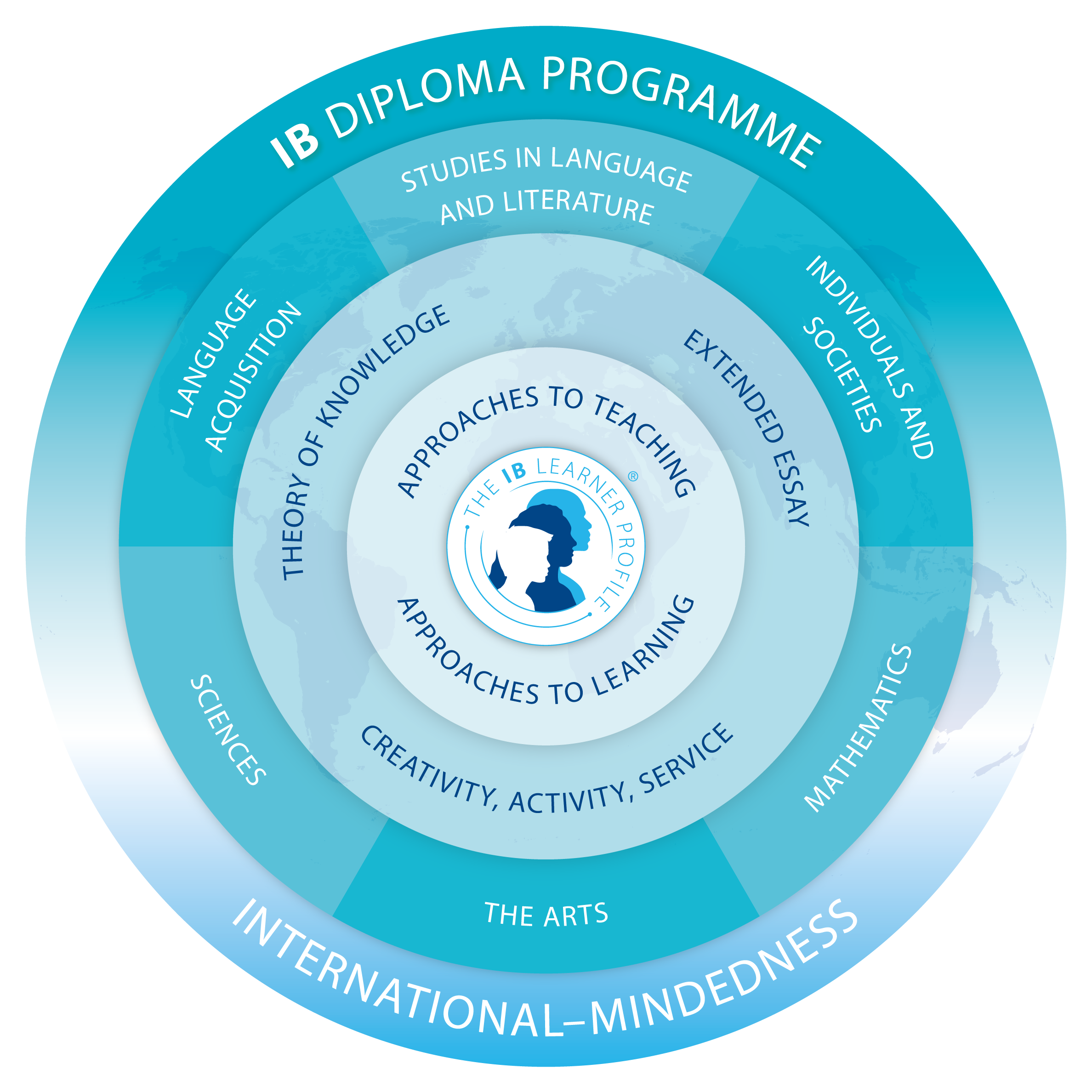
We offer the International Baccalaureate Diploma Programme (DP), which is a rigorous two-year course of study for students in Grades 11 and 12. At its center are three core requirements — the Extended Essay, Theory of Knowledge, and Creativity, Action & Service — surrounded by six subject groups that together give students a broad, balanced education.


Example of an IB student schedule

The Core Requirements

Every DP student completes an independent research project on a topic of their choosing, working closely with a faculty supervisor. The result is a formal essay of up to 4,000 words, followed by a reflective discussion (viva voce) with the supervisor. Students typically invest around 40 hours over the course of the project — researching, writing, and revising — before submitting their work for external assessment by IB examiners.

TOK invites students to step back and examine how we know things, not just what we know. Through questions like "how do we know the sky is blue?", students learn to interrogate assumptions, evaluate different ways of knowing, and think critically across disciplines. Many alumni look back on TOK as one of the most thought-provoking parts of their Clariden experience.

Beyond the classroom, DP students complete approximately 150 hours of self-directed activities across three areas over the two-year programme:

Creativity — Bringing something new into the world, whether that's visual art, writing, music, starting a club, or launching a project that requires original thinking.

Action — Staying physically active through sports, fitness, or recreational pursuits — from team athletics to activities like hiking, dance, or martial arts.

Service — Contributing time to others without compensation, such as volunteering, tutoring younger students, supporting a local nonprofit, or participating in community outreach.
 

Universities regularly cite DP students as the best prepared for higher education, and DP graduates are well-equipped to adjust, engage, and succeed. They graduate with analytical, writing, communication, and presentation skills; research experience; excellent organization and time management; the ability to approach a topic from multiple perspectives; and a deep understanding of academic concepts. This provides an excellent foundation for them to prosper at their chosen university.

IB FAQs

An IB education does not end after graduation; it stays with students through life and prepares them for a world of opportunities. Research from various countries suggests that IB students tend to outperform their peers.

A study on college achievement in the United States showed that:

  • IB diploma graduates had higher immediate college enrollment rates (74%) compared to national averages (64%)
  • 65% enrolled at a four-year institution compared to national average (43%)
  • 88% persisted at four-year institutions compared to national average (72%)
  • IB World Schools (the only schools authorized to offer IB programs) are subject to a strict accreditation process monitored by the IB, ensuring that schools provide a high-quality education.
  • IB teaching methods and curricula are research-based and draw from the best educational practices from systems around the world.
  • IB teachers are required to participate in many professional development opportunities to continually promote their awareness of current educational practices and new thinking.
  • IB programs are recognized internationally. Universities and future employers recognize the depth and breadth of the rigorous work undertaken by IB students.
     

Parents who want the best possible education for their children choose the Diploma Programme (DP) because it offers:

  • A challenging academic curriculum that serves as outstanding preparation for university and higher education;
  • A student-centered approach to teaching, focused on developing students intellectually, emotionally physically, and socially, as opposed to preparation for test-taking only;
  • A focus on international-mindedness, compassion, and understanding intercultural differences; and
  • Respected, reliable, and world-renowned academic preparation. 

Absolutely! Most successful Diploma Programme students lead very full lives as upper school students. They are often members of extra-curricular teams and are involved in a wide range of activities. Time management and organization are key skills IB develops in students.

All DP teachers receive professional development in the IB’s approaches to teaching and approaches to learning from certified IB workshop leaders. This is a requirement for IB World Schools implementing the DP.

The IB DP is a two-year comprehensive curriculum with a culminating set of externally graded final exams. IB and Advanced Placement (AP) programs are academically rigorous programs that prepare students for college study. There are important differences, however, in the content and exams. The DP is a cohesive and comprehensive program, not a collection of individual courses as is the case with Advanced Placement. The most important distinguishing factor is the core of the Diploma Programme (CAS, TOK, and extended essay).

A 2015 study obtained by the Educational Policy Improvement Center revealed that students viewed AP only as a means to obtain college credit in high school, while the DP is considered a holistic program that develops strong life-long learners.

Additional studies on program impact are available at www.ibo.org/research.

Accepting Applic